If you're serious about improving your surfing, strength training isn't optional—it's essential. The difference between catching that critical wave and watching it pass you by often comes down to one thing: power.
But here's what most surfers get wrong: they either skip the gym entirely, relying only on time in the water, or they follow generic programs that add bulk without improving performance. Neither approach works.
This guide covers everything you need to build strength that actually translates to better surfing:
- Why surfers need strength training (backed by science)
- The specific types of strength that matter for surfing
- How to structure your program for maximum results
- The best exercises for building surf-specific power
- Common mistakes that waste time and limit progress
- A complete sample program you can start today
If you’re looking for a simple list to start with, here are the best exercises for surfing.
Why Strength Training Actually Matters for Surfers
"Just surf more" is the worst advice given to surfers who want to improve. While time in the water is crucial for technique and wave reading, surfing alone won't build the explosive power and strength you need for advanced performance.
Here's what research and real-world experience show:
The Science Behind It
Studies analyzing elite surfers reveal that surf-specific strength and power are critical determinants of performance:
- Pop-up speed directly correlates with upper body pushing and pulling strength
- Turn power requires explosive rotational strength and lower body power
- Paddle efficiency improves with shoulder and lat strength endurance
- Injury prevention depends on shoulder stability and posterior chain strength
A study published in the Journal of Strength and Conditioning Research found that surfers with higher strength-to-bodyweight ratios consistently outperformed their peers in competition settings.
What Happens When You Skip It
Surfing without dedicated strength work creates predictable limitations:
- Weak pop-ups: You're late on waves because you can't generate enough explosive power
- Limited turn power: You lack the rotational strength to drive through critical maneuvers
- Early fatigue: Without strength endurance, your technique deteriorates mid-session
- Increased injury risk: Poor shoulder stability and muscle imbalances lead to chronic pain
The best surfers in the world—from Kelly Slater to John John Florence—all prioritize strength training as a core component of their programs.
The 4 Types of Strength That Matter for Surfing
Not all strength is created equal. Your training must target the specific types of strength that directly improve surfing performance.
1. Maximum Strength: Your Power Foundation
Maximum strength is your ability to generate maximum force, regardless of time. This is the foundation that all other strength qualities are built upon.
Why it matters for surfing:
- Provides the raw horsepower for explosive movements
- Allows you to generate more force during paddle strokes
- Enables more powerful compression and extension in turns
- Supports long-term joint health and injury resilience
How to train it: Heavy compound movements (80-90% of max), low reps (3-6), long rest periods (2-3 minutes)
2. Power: Explosive Force Production
Power is your ability to generate maximum force in minimum time—the most critical attribute for surfing performance.
Why it matters for surfing:
- Fast pop-ups: Getting from prone to feet in a fraction of a second
- Explosive paddling: That final burst to catch a steep, fast-moving wave
- Dynamic turns: Generating speed through compression and extension
- Aerial maneuvers: Explosive projection off the lip
How to train it: Moderate loads (30-70% max), maximum velocity movements, full recovery between sets
3. Strength Endurance: Sustained Performance
Strength endurance is your ability to repeatedly produce force over extended periods without deteriorating technique.
Why it matters for surfing:
- Maintain pop-up speed throughout a 2-3 hour session
- Consistent paddle power from first wave to last
- Execute powerful turns in the final set as well as the first
- Resist shoulder and core fatigue during long paddles
How to train it: Moderate loads (60-75% max), higher reps (10-15), shorter rest periods (45-90 seconds)
4. Reactive Strength: Stretch-Shortening Cycle
Reactive strength is your ability to quickly absorb force and immediately redirect it—like a spring loading and releasing.
Why it matters for surfing:
- Absorb impact from landing aerials and hitting sections
- Rapidly change direction during critical maneuvers
- Generate speed through compression and extension cycles
- Maintain balance through reactive adjustments
How to train it: Plyometric exercises, medicine ball throws, jump variations
The Essential Exercises
These exercises form the core of effective surf-specific strength training, targeting the movement patterns and muscle groups that directly translate to performance.
1. Pull-Ups and Chin-Ups: The King of Paddle Strength
If you could only do one exercise, pull-ups would be it. They build the exact pulling strength pattern you use when paddling, while developing shoulder stability and grip strength.
Benefits for surfing:
- Builds massive paddle power through lats, upper back, and shoulders
- Develops grip strength that translates to endurance
- Improves shoulder health through full range of motion strength
- Scalable for all levels (use assistance or add weight)
Progression:
- Beginner: Assisted pull-ups or inverted rows
- Intermediate: Bodyweight pull-ups for reps
- Advanced: Weighted pull-ups or explosive variations
Recommended volume: 3-5 sets of 5-10 reps
2. Bent-Over Rows: Build a Strong Back
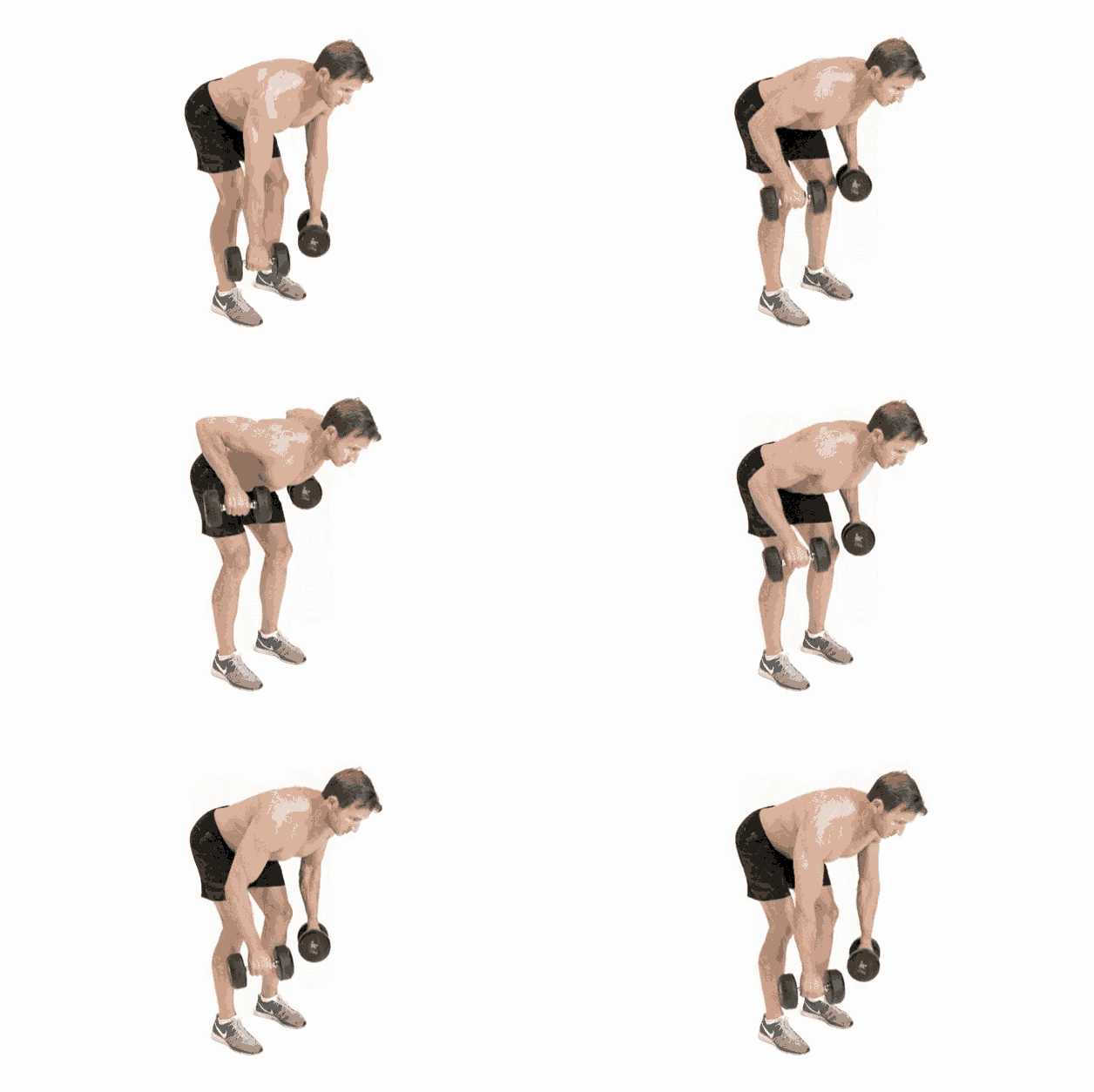
The bent-over row is one of the most effective exercises for surfers because it targets the entire posterior chain while mimicking the paddling position.
Benefits for surfing:
- Builds thick, strong lats for powerful paddle strokes
- Strengthens the postural muscles that keep you in prone position
- Develops the pulling strength needed for explosive wave catches
- Improves shoulder blade control for joint health
How to perform:
- Hinge at the hips with a flat back, knees slightly bent
- Pull the barbell or dumbbells toward your lower ribs
- Lead with your elbows, not your hands
- Lower with control and maintain neutral spine throughout
Recommended volume: 3-4 sets of 8-12 reps
3. Kettlebell Swings: Explosive Hip Power
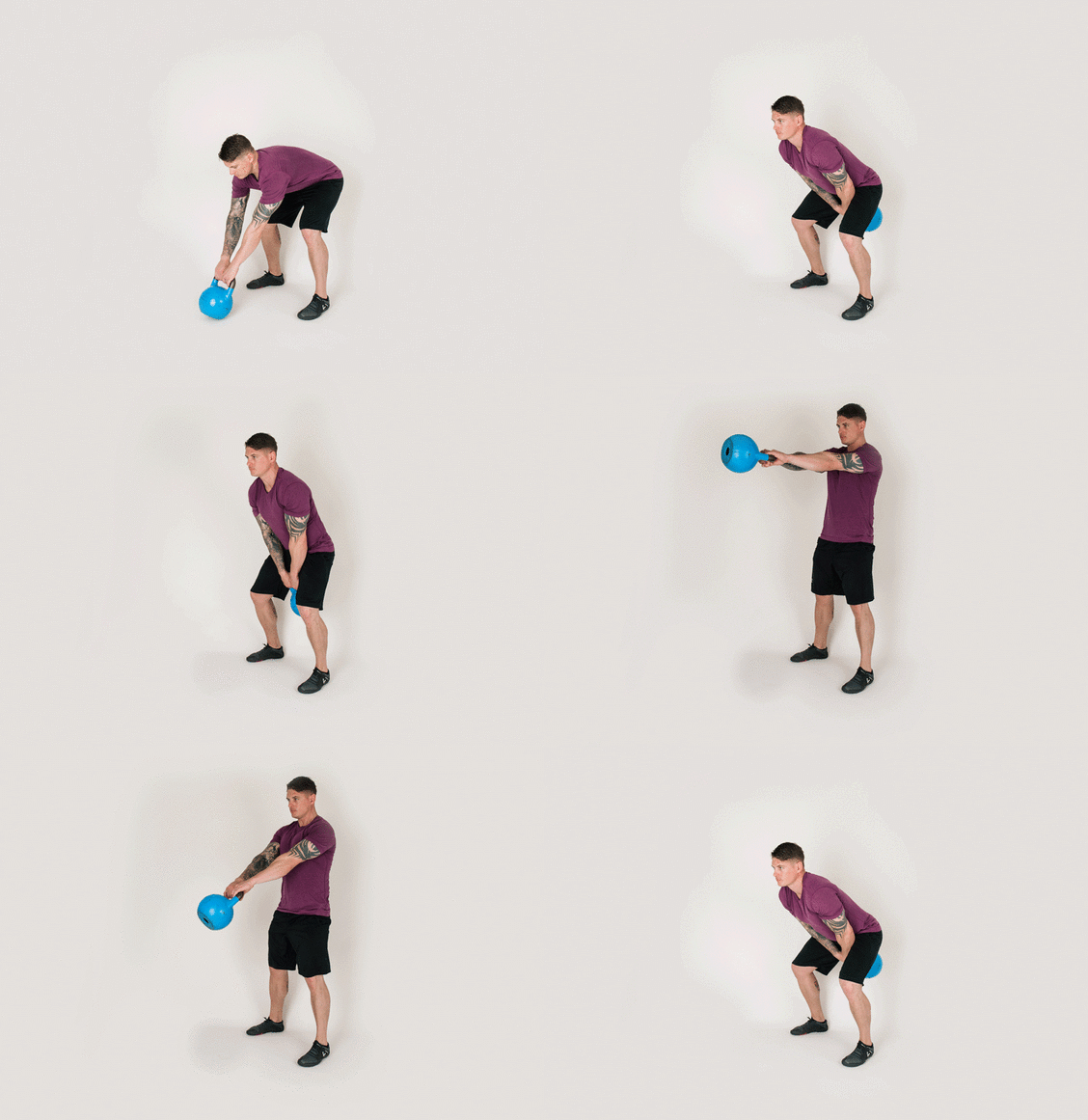
The kettlebell swing develops explosive hip extension—the exact power pattern you use to drive through bottom turns and generate speed down the line.
Benefits for surfing:
- Builds explosive posterior chain power for turns and maneuvers
- Develops the hip hinge pattern critical for compression and extension
- Conditions the entire body for repeated explosive efforts
- Improves cardiovascular capacity while building power
How to perform:
- Start with kettlebell on ground between feet
- Hinge at hips and swing kettlebell back between legs
- Explosively drive hips forward, standing tall
- Let momentum swing kettlebell to chest height (don't lift with arms)
- Allow kettlebell to swing back and repeat
Recommended volume: 3-5 sets of 10-20 reps
4. Floor Press: Shoulder-Safe Pushing Power
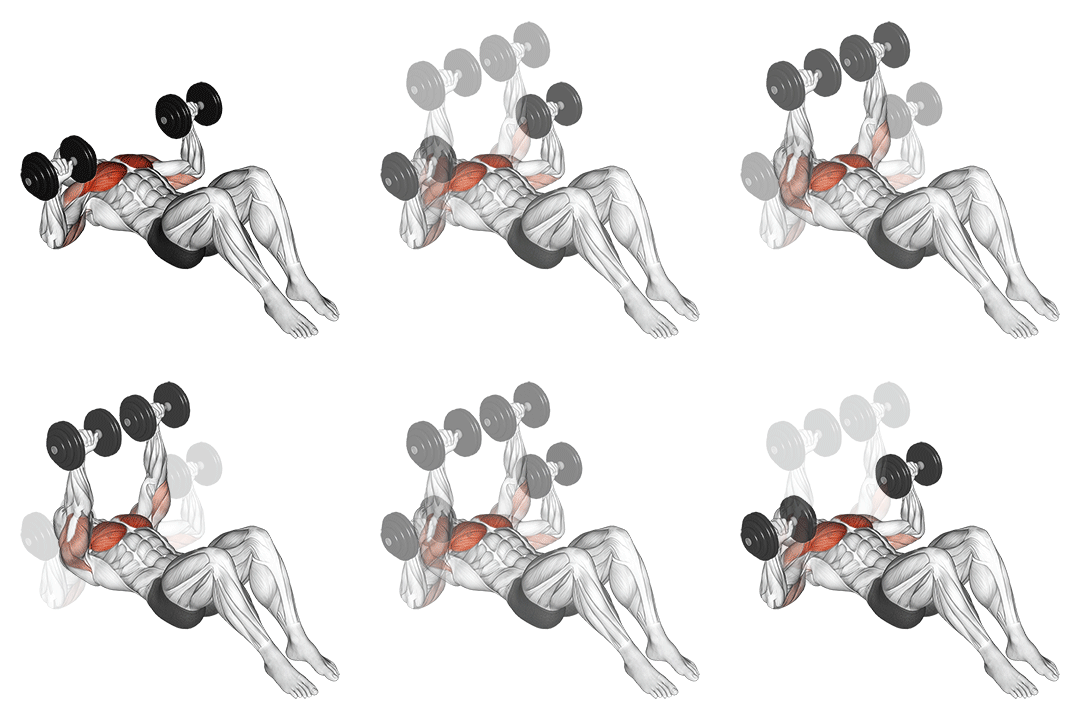
Traditional bench pressing can aggravate surfer shoulders. The floor press provides the same upper body pushing strength while protecting your shoulders from excessive stress.
Benefits for surfing:
- Builds explosive pop-up power without shoulder strain
- Develops triceps and chest strength for fast transitions
- Limited range of motion protects shoulders from overextension
- Teaches forceful acceleration from a dead stop (like pop-ups)
How to perform:
- Lie on floor with knees bent, feet flat
- Press dumbbells or barbell from chest to full extension
- Lower until elbows touch floor, then immediately explode up
- Keep shoulder blades squeezed together throughout
Recommended volume: 3-4 sets of 6-10 reps
5. Goblet Squat: Lower Body Power and Mobility
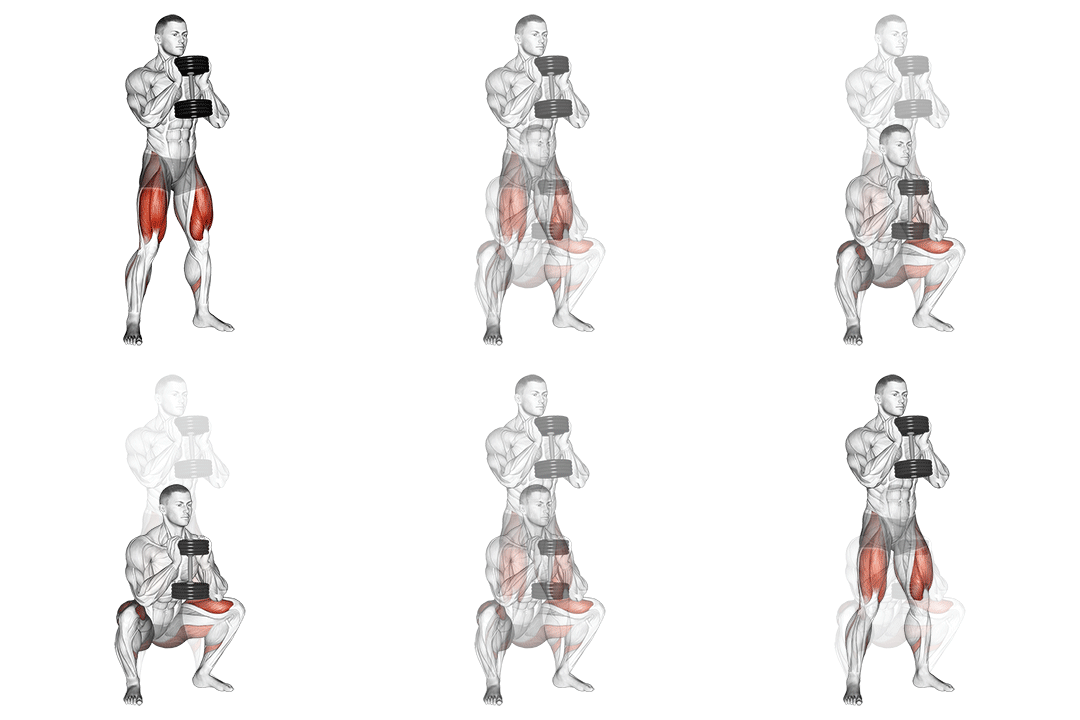
Strong, mobile legs are essential for powerful surfing. The goblet squat builds lower body strength while improving the hip and ankle mobility needed for deep compression.
Benefits for surfing:
- Develops explosive leg power for pop-ups and turns
- Improves hip and ankle mobility for deeper compression
- Builds the quad and glute strength needed for speed generation
- Teaches proper squat mechanics with minimal coaching
How to perform:
- Hold kettlebell or dumbbell at chest height
- Squat down keeping chest upright
- Push knees out, sit between your legs
- Drive through midfoot to stand explosively
Recommended volume: 3-4 sets of 8-12 reps
6. Dumbbell Romanian Deadlift (RDL): Posterior Chain Strength
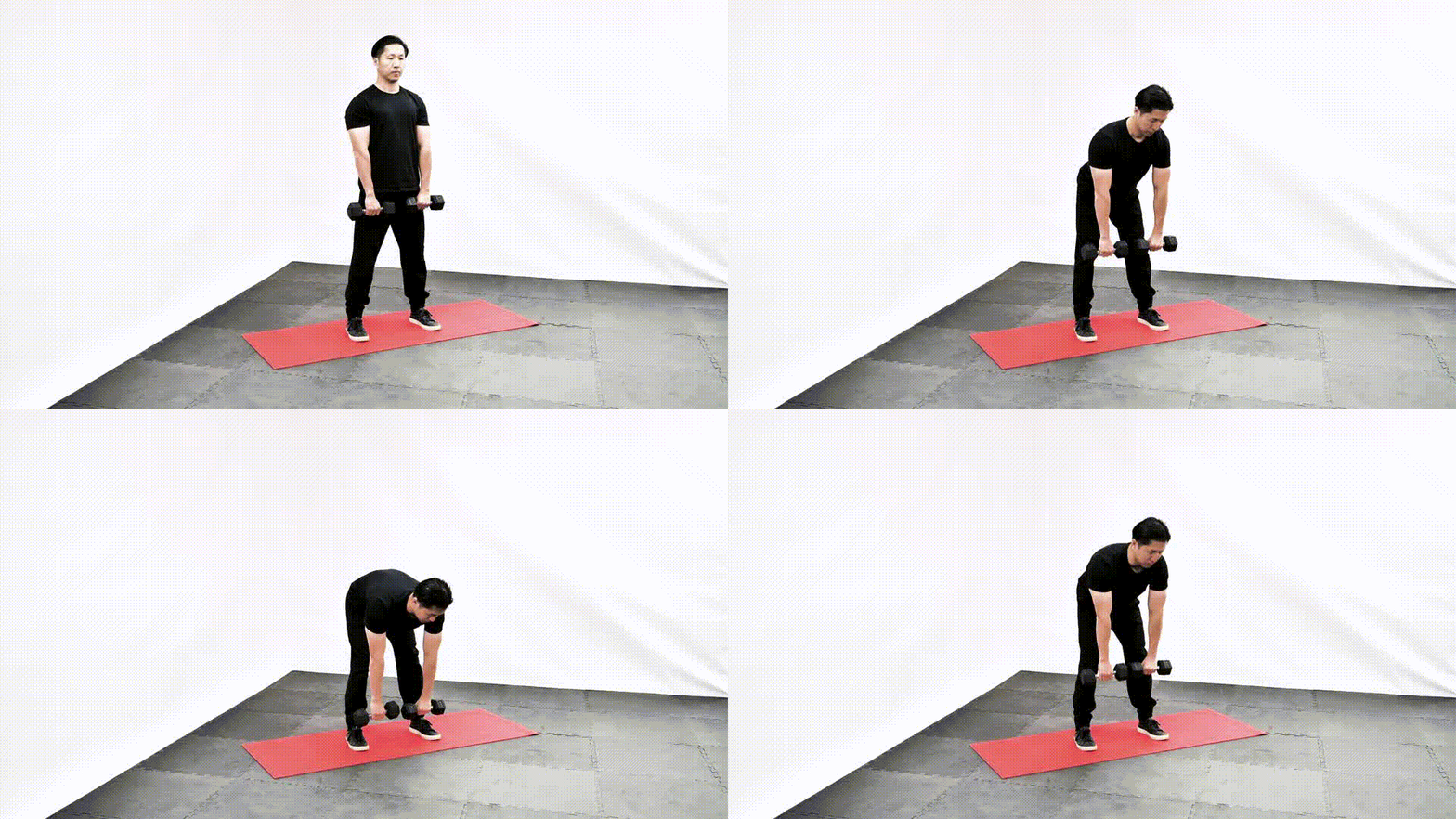
The RDL builds the hamstring, glute, and lower back strength that powers your paddling position and explosive hip extension.
Benefits for surfing:
- Strengthens the posterior chain for maintained paddle position
- Develops hip hinge pattern for compression and extension
- Builds hamstring strength that protects knees during dynamic movements
- Improves lower back endurance for long sessions
How to perform:
- Stand with dumbbells in front of thighs
- Hinge at hips, pushing butt back while keeping back flat
- Lower weights down legs until you feel hamstring stretch
- Drive hips forward to stand, squeezing glutes at top
Recommended volume: 3 sets of 10-12 reps
7. Medicine Ball Rotational Throws: Explosive Rotation
Surfing is a rotational sport. Medicine ball throws develop the explosive rotational power you need for powerful turns and maneuvers.
Benefits for surfing:
- Builds explosive rotational strength for powerful turns
- Teaches proper force transfer from lower to upper body
- Develops core power for torso rotation
- Improves rate of force development (speed of strength application)
How to perform:
- Stand sideways to a wall, holding medicine ball at chest
- Rotate away from wall, loading the back hip
- Explosively rotate toward wall, throwing ball with power
- Catch the rebound and repeat
Recommended volume: 3-4 sets of 6-8 throws per side
8. Pop-Up Sprawl: Surf-Specific Power Endurance
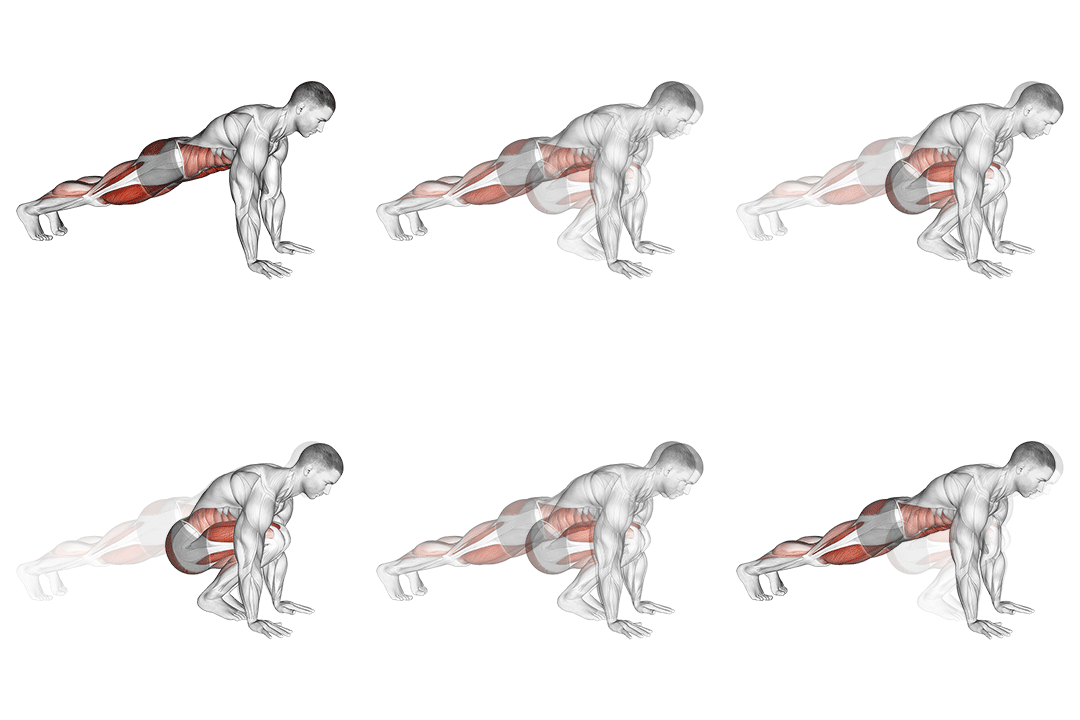
This exercise directly mimics the pop-up movement while building the conditioning to repeat it throughout a session.
Benefits for surfing:
- Rehearses the exact pop-up movement pattern
- Builds explosive hip extension from prone position
- Develops the strength endurance to maintain pop-up speed all session
- Conditions the cardiovascular system for repeated efforts
How to perform:
- Start in push-up position
- Explosively jump feet toward hands and stand up quickly
- Lower back down to push-up position with control
- Repeat continuously for time or reps
Recommended volume: 3-4 sets of 10-15 reps
How to Structure Your Program
Having the best exercises means nothing without proper programming. Here's how to structure your training for maximum results.
Training Frequency and Volume
If you surf 4+ times per week:
- 2-3 strength sessions per week
- Keep volume moderate to avoid interference with surf sessions
- Focus on quality over quantity
If you surf 2-3 times per week:
- 3-4 strength sessions per week
- Can handle higher training volume
- Emphasize progressive overload
If you're not currently surfing (offseason or injured):
- 4-5 strength sessions per week
- Use this time to build maximum strength foundation
- Include more volume and higher intensities
Periodization: The Key to Continuous Progress
Effective training requires periodization—systematically varying your program to drive continuous adaptation.
Phase 1: Strength Foundation (4-6 weeks)
- Goal: Build maximum strength and movement quality
- Rep ranges: 4-6 reps
- Intensity: 80-85% of max
- Rest periods: 2-3 minutes
- Focus exercises: Pull-ups, bent-over rows, goblet squats, floor press
Phase 2: Power Development (4-6 weeks)
- Goal: Convert strength into explosive power
- Rep ranges: 3-5 reps (performed explosively)
- Intensity: 70-80% of max
- Rest periods: 2-3 minutes
- Focus exercises: Jump variations, medicine ball throws, explosive swings
Phase 3: Strength Endurance (4-6 weeks)
- Goal: Sustain power output throughout long sessions
- Rep ranges: 10-15 reps
- Intensity: 65-75% of max
- Rest periods: 45-90 seconds
- Focus exercises: Circuit training, higher volume on all movements
Phase 4: Maintenance (ongoing)
- Goal: Maintain gains while maximizing surf time
- Frequency: 2 sessions per week
- Volume: Reduced by 30-40%
- Focus: Key lifts that maintain strength with minimal fatigue
Note: Looking for a complete beginner-friendly program that combines strength, cardio, and mobility work? Check out our complete surf workout routine for a ready-to-follow weekly split.
Recovery Considerations
Your strength training should enhance your water time, not interfere with it:
- Schedule strength work on non-surf days when possible
- If training and surfing same day: lift after surfing, or allow 6+ hours between sessions
- Monitor shoulder fatigue: If paddling feels weak or painful, reduce upper body volume
- Prioritize sleep: Most adaptations happen during recovery
- Take complete rest days: At least 1-2 per week with no training
Complete Sample Programs
Here are two complete programs you can implement immediately.
Program A: Upper/Lower Split (4 days per week)
Day 1: Upper Body Pull Focus
- A1. Pull-Ups – 4 sets x 6-8 reps
- A2. Floor Press – 4 sets x 6-8 reps
- B1. Bent-Over Row – 3 sets x 10-12 reps
- B2. Half-Kneeling Press – 3 sets x 8 reps per side
- C. Band Pull-Aparts – 3 sets x 15-20 reps
Day 2: Lower Body + Power
- A. Goblet Squat – 4 sets x 8-10 reps
- B. Dumbbell RDL – 3 sets x 10-12 reps
- C. Kettlebell Swings – 4 sets x 15 reps
- D. Medicine Ball Slams – 3 sets x 10 reps
- E. Pop-Up Sprawls – 3 sets x 12 reps
Day 3: Upper Body Push Focus
- A1. Floor Press – 4 sets x 8-10 reps
- A2. Single-Arm Row – 4 sets x 10 reps per side
- B1. Half-Kneeling Press – 3 sets x 10 reps per side
- B2. Chest-Supported Row – 3 sets x 12 reps
- C. Farmer Carry – 3 sets x 50 meters
Day 4: Lower Body + Rotation
- A. Reverse Lunge – 4 sets x 8 reps per leg
- B. Single-Leg RDL – 3 sets x 10 reps per leg
- C. Medicine Ball Rotational Throws – 4 sets x 8 throws per side
- D. Kettlebell Windmill – 3 sets x 6 reps per side
- E. Dead Bug – 3 sets x 10 reps per side
Program B: Full Body (3 days per week)
Monday: Strength Focus
- A. Pull-Ups – 5 sets x 5 reps (add weight if possible)
- B. Goblet Squat – 4 sets x 6-8 reps
- C. Floor Press – 4 sets x 6-8 reps
- D. Dumbbell RDL – 3 sets x 10 reps
- E. Farmer Carry – 3 sets x 60 meters
Wednesday: Power Focus
- A. Medicine Ball Slams – 4 sets x 8 reps
- B. Kettlebell Swings – 5 sets x 12 reps
- C. Pop-Up Sprawls – 4 sets x 10 reps
- D. Medicine Ball Rotational Throws – 3 sets x 8 throws per side
- E. Explosive Pull-Ups – 4 sets x 4 reps
Friday: Endurance Focus
- Circuit (3-4 rounds, 60 seconds rest between rounds):
- Single-Arm Row – 12 reps per side
- Goblet Squat – 15 reps
- Push-Ups – 15 reps
- Reverse Lunge – 10 reps per leg
- Kettlebell Swings – 20 reps
- Dead Bug – 10 reps per side
Common Mistakes to Avoid
These mistakes sabotage your progress:
Mistake #1: Training Like a Bodybuilder
High-volume bodybuilding splits with 4-5 exercises per muscle group don't improve surfing performance. They add unnecessary bulk and fatigue without building functional strength.
Fix: Focus on compound movements that train multiple muscle groups and movement patterns simultaneously. For a complete surf-specific approach, see our surf workout routine guide.
Mistake #2: Neglecting Lower Body Training
Many surfers over-emphasize upper body work while ignoring legs. This creates imbalances and limits rotational power and explosive pop-ups.
Fix: Include 2-3 lower body movements in every session.
Mistake #3: Never Training for Power
Grinding out slow, controlled reps builds strength but not the explosive power surfing demands.
Fix: Include explosive movements (swings, throws, jumps) in every training phase.
Mistake #4: Random Exercise Selection
Choosing exercises based on what equipment is available or what "feels good" rather than what drives surf performance.
Fix: Build your program around the essential movement patterns: pull, push, squat, hinge, carry, and rotate.
Mistake #5: Ignoring Periodization
Doing the same workout week after week leads to stagnation and plateaus. Many surfers need guidance on how to properly periodize their training.
Fix: Follow a structured periodization plan that progresses through different training phases, like the programs outlined in this article.
Mistake #6: Training Too Hard, Too Often
More isn't always better. Excessive volume without adequate recovery leads to chronic fatigue and decreased performance.
Fix: Follow the minimum effective dose—train hard when you train, but prioritize quality over quantity.
Mistake #7: Focusing Only on Strength, Ignoring Endurance
Strength without endurance means you're powerful for the first few waves, then gassed. You need both qualities.
Fix: Combine strength work with dedicated paddle endurance training. See our cardio for surfing guide for conditioning protocols.
Finding the Balance: Gym vs. Water Time
The biggest challenge is balancing land training with water time. Here's how to make it work:
Prioritize Surfing When Conditions Are Good
When the waves are firing, surf. The gym can wait—you can't recreate perfect conditions.
Strategy: Schedule 2 weekly "core" strength sessions you never miss, plus 1-2 "optional" sessions you skip when surf is good.
Adjust Training Volume Based on Surf Frequency
High surf frequency (4-5+ sessions/week):
- Reduce strength training to 2 sessions
- Lower volume per session
- Focus on maintaining strength rather than building it
Moderate surf frequency (2-3 sessions/week):
- 3 strength sessions per week
- Moderate to high volume
- Can push for progressive overload
Low surf frequency (0-1 sessions/week):
- 4 strength sessions per week
- Higher volume and intensity
- Build maximum strength foundation
Use Strength Training to Fill Surf Gaps
Flat spells are opportunities for strength gains. When you can't surf, lean into your gym program.
Tracking Progress: How to Know It's Working
Effective training should produce measurable improvements both in and out of the water.
Performance Metrics in the Gym
Track these key strength markers:
- Pull-ups: Target 10+ bodyweight reps or 5+ reps with 25% bodyweight added
- Goblet squat: Handle 50-70% of bodyweight for 8-10 controlled reps
- Kettlebell swings: Swing 50-70% of bodyweight for 20 reps with power
- Floor press: Press 60-80% of bodyweight per hand for 8 reps
Performance Improvements in the Water
The real test is how you perform in the surf:
- Faster pop-ups: Measurably quicker transition from prone to feet
- More waves caught: Increased ability to position and paddle into waves
- Sustained power: Maintaining turn power and pop-up speed late in sessions
- Increased confidence: Feeling strong enough to attack critical sections
Timeline for Results
Following a structured program:
- 2-3 weeks: Neural adaptations, exercises feel easier and more controlled
- 4-6 weeks: Noticeable strength increases in gym, slightly improved pop-up speed
- 8-12 weeks: Significant strength gains, clearly faster pop-ups and more powerful turns
- 3-6 months: Transformed surf performance, catching waves you previously couldn't
Integrating Strength with Your Complete Training
Strength training is one critical component of a complete surf training program. While this article focuses specifically on building maximum strength and power, remember that a well-rounded surf workout routine should also include:
- Paddle endurance work — See our guide on cardio for surfing for conditioning protocols
- Mobility and injury prevention — Especially for shoulders and hips
- Balance and stability training — Dynamic balance work under fatigue
- Recovery protocols — Sleep, nutrition, and active recovery
The strength work in this guide provides the raw power foundation, while complementary training develops the endurance, mobility, and skill-specific qualities that make you a complete surfer.
Beyond the Basics: Advanced Strategies
Once you've mastered the fundamentals, these advanced strategies can take your training to the next level.
Complex and Contrast Training
Pair a heavy strength exercise with an explosive power exercise to maximize power development:
Example Complex:
- A1. Heavy Goblet Squat – 4 reps @ 85% max
- Rest 30 seconds
- A2. Jump Squat – 5 reps @ maximum velocity
- Rest 2 minutes, repeat for 4-5 sets
The heavy lift "potentiates" your nervous system, making the explosive movement even more powerful.
Wave-Based Periodization
Instead of traditional linear periodization, use wave loading to undulate intensity week-to-week:
- Week 1: 4x6 reps @ 80%
- Week 2: 5x3 reps @ 87%
- Week 3: 3x8 reps @ 75%
- Week 4: 4x5 reps @ 83%
This creates variation while still driving progressive overload.
Accommodating Resistance
Use bands and chains to vary resistance throughout the range of motion, building strength at all joint angles:
- Example: Banded pull-ups (harder at top, easier at bottom)
- Example: Chain-loaded floor press (heavier at lockout)
Nutrition to Support Your Training
Strength training places new demands on your body. Proper nutrition ensures you recover and adapt optimally.
Protein for Muscle Building and Recovery
Target 0.7-1.0 grams of protein per pound of bodyweight daily:
- Post-workout: 20-40g protein within 2 hours
- Daily distribution: Spread across 3-4 meals
- Quality sources: Meat, fish, eggs, dairy, legumes
Carbohydrates for Performance and Recovery
Carbs fuel intense training and replenish glycogen:
- Pre-workout: 30-50g carbs 1-2 hours before training
- Post-workout: 40-80g carbs to restore glycogen
- Training days: 2-3g carbs per pound of bodyweight
- Rest days: Can reduce to 1-2g per pound
Hydration for Performance
Dehydration crushes strength and power:
- Start sessions well-hydrated (clear/pale urine)
- Drink during workouts longer than 45 minutes
- Rehydrate after sessions (16-20oz per pound lost)
Get a Complete, Done-For-You Program
Understanding the principles is one thing—implementing a properly periodized, comprehensive program that balances strength, power, endurance, mobility, and recovery is another. Most surfers know they should strength train, but struggle with:
- Which exercises to choose and when
- How to program progressive overload across phases
- When to emphasize strength vs. power vs. endurance
- How to integrate strength work with paddle endurance training
- How to balance land training with surf sessions
- Whether they're actually making progress
The SurfStrength App solves all of these problems by providing complete, surf-specific training programs that integrate strength, conditioning, and mobility work—all designed specifically for surfers.
What Makes SurfStrength the Complete Surf Training Solution
- Integrated Strength + Conditioning — Combines the strength training principles from this guide with paddle endurance, mobility, and recovery work
- Complete Periodized Programming — Structured progression through strength, power, and endurance phases
- Surf-Specific Exercise Selection — Every movement chosen specifically for surf performance
- Flexible Scheduling — Adapts to your surf schedule and available training days
- Progressive Overload Built In — Systematic increases in volume and intensity
- Exercise Demonstrations — Video coaching for every movement
- Minimal Equipment — Most workouts require only basic equipment
- Zero Planning Required — Just open the app and follow the workout
Who Should Use This Program
The SurfStrength App is perfect for:
- Surfers who want faster pop-ups and more powerful turns
- Anyone who knows they should strength train but doesn't know where to start
- Intermediate and advanced surfers looking to maximize performance
- Surfers who want a structured program without hiring a coach
- Anyone frustrated with generic gym programs that don't improve surfing
If you're ready to build the explosive power and sustained strength that transforms your surfing—start your program today.
The Bottom Line
The right approach to strength training isn't about building beach muscles or hitting arbitrary numbers in the gym. It's about developing the explosive power, sustained strength, and functional movement patterns that directly translate to better surfing performance.
The key principles:
- Train the right qualities: Maximum strength, power, strength endurance, and reactive strength
- Choose surf-specific exercises: Pulling, pushing, squatting, hinging, rotating, and carrying
- Follow progressive periodization: Systematically vary training to drive continuous adaptation
- Integrate with conditioning: Combine strength with paddle endurance training for complete development
- Balance with surf sessions: Land training should support water time, not compete with it
- Track meaningful metrics: Both gym performance and surf performance improvements
Apply these principles consistently alongside proper conditioning and mobility work, and you'll build the physical capabilities that let you surf at your highest level—faster pop-ups, more powerful turns, and sustained performance throughout long sessions.
For a complete ready-to-follow program that combines all these elements, explore our surf workout routine or get the full SurfStrength App.
The best surfers aren't just talented—they're strong, powerful, and well-trained. Now it's your turn.